
The history of circumcision: From ancient rituals to modern practices
Circumcision is one of the oldest known medical practices, with roots that trace back thousands of years. While the procedure has evolved over time, its significance and practice have varied greatly across different cultures and historical periods. Understanding the history of circumcision offers insight into why it continues to be a prevalent procedure today.
Ancient Egypt: The birthplace of circumcision
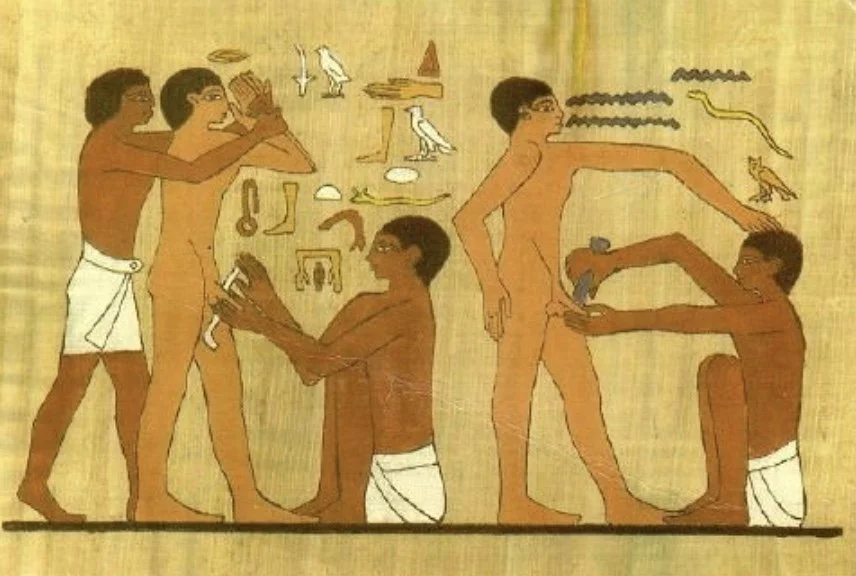
One of the earliest recorded instances of circumcision comes from ancient Egypt, where it was performed as a rite of passage into adulthood. The practice was so integral to Egyptian culture that it was immortalized in their art. Notably, a bas-relief from the Sixth Dynasty (c. 2345–2181 BCE) depicting a circumcision scene is currently housed in the Louvre Museum in Paris. This artifact offers a glimpse into the ancient world's views on circumcision, symbolizing purification and readiness for adulthood.
The history of circumcision begins in ancient Egypt around 2300 BCE, making it one of humanity's oldest surgical procedures. Learn more about modern circumcision practices.
Circumcision in the Jewish faith
Circumcision holds profound religious significance in the Jewish faith, where it is known as Brit Milah or the "Covenant of Circumcision." This ritual is one of the oldest and most enduring practices in Judaism, dating back to the biblical figure Abraham, who is commanded by God to circumcise himself and his descendants as a sign of their covenant.
Performed on the eighth day after a male child's birth, Brit Milah symbolizes the child's entry into the Jewish community and his connection to the faith's ancient covenant. The ceremony is often accompanied by prayers, blessings, and a celebratory meal, highlighting its deep spiritual and communal importance. Over millennia, this practice has remained a central tenet of Jewish identity and tradition, underscoring the religious and cultural dimensions of circumcision.
The circumcision in Renaissance art: Rome, 1492
The practice of circumcision also found its way into Renaissance art, symbolizing its continued religious and cultural importance. A notable example is the painting "The Circumcision," created in Rome in 1492. This artwork, often associated with the Christian tradition, depicts the circumcision of Jesus, a significant event in Christian iconography.
The painting captures the ritual's spiritual significance during this period, reflecting the intersection of religious tradition and art in Renaissance Europe. The attention to detail and the reverence shown in the depiction highlight how deeply rooted circumcision was in the religious and cultural fabric of the time.
Timeline: History of circumcision milestones
2300 BCE: Ancient Egypt performs circumcision as rite of passage
Biblical era: Abraham establishes Jewish covenant of circumcision
1492: Renaissance art depicts circumcision of Jesus
WWI & WWII: U.S. military mandates circumcision for soldiers
2007: WHO recognizes circumcision for HIV prevention
Present: 30% of males worldwide are circumcised
Circumcision in the United States: A wartime legacy

Fast forward to the 20th century, and circumcision became a widespread practice in the United States, largely due to military influence during the World Wars. During World War I and World War II, circumcision was made mandatory for soldiers in the U.S. military. The procedure was intended to prevent infections and maintain hygiene in the challenging and often unsanitary conditions of war.
This practice, initially aimed at adult soldiers, gradually extended to newborns as a standard preventive measure, contributing to the high rates of infant male circumcision in the United States. This wartime influence represents a pivotal chapter in the history of circumcision in America. Today, circumcision practices and regulations vary by state, reflecting America's diverse approach to this procedure.
Medical endorsement of infant male circumcision
In recent decades, both the World Health Organization (WHO) and the American Academy of Pediatrics (AAP) have recognized the medical benefits of infant male circumcision. The WHO endorses the procedure, particularly in regions with high rates of HIV transmission, as studies have shown that circumcision can significantly reduce the risk of heterosexual transmission of the virus.
The AAP, while acknowledging the cultural, religious, and ethical considerations involved, has stated in its 2012 policy statement that the health benefits of newborn male circumcision outweigh the risks. The policy statement expired in 2017 and has not been replaced; however, it remains the most recent formal policy issued by the AAP on this topic.
The benefits include a reduced risk of urinary tract infections during infancy, a lower risk of certain sexually transmitted infections, and a decreased likelihood of penile cancer later in life. The AAP's policy encourages parents to make an informed decision in consultation with their healthcare providers, highlighting the procedure's potential advantages while respecting individual choice.
Cultural and medical evolution
Over the centuries, circumcision has shifted from a ritualistic and cultural practice to one rooted in medical rationale, especially in the Western world. However, it remains a deeply personal decision, influenced by cultural, religious, and medical factors. Today's circumcision practices must also accommodate diverse family situations, including foster and adopted infants who may need access to care outside traditional hospital timelines. The history of circumcision is a testament to its enduring significance in human culture, from the rituals of ancient Egypt to the medical practices of modern times.
Understanding this history provides valuable context for families considering the procedure today, particularly in the United States. It's also helpful to separate historical facts from modern myths when making this important decision. At SafeCirc®, we honor this rich history while providing modern, evidence-based care. For answers to common questions about newborn circumcision, we're here to help. Learn about our AccuCirc® device and its development or schedule your baby's care at SafeCirc® to experience our family-centered approach.
Frequently asked questions
When did the history of circumcision begin? The history of circumcision dates back to ancient Egypt around 2300 BCE, making it one of the oldest known surgical procedures. Early evidence includes bas-relief artwork from the Sixth Dynasty depicting circumcision scenes.
Why was circumcision practiced in ancient cultures? Ancient cultures practiced circumcision for various reasons, including religious covenant (Judaism), rites of passage (Egypt), hygiene, and social status. Each culture incorporated circumcision into its traditions with different meanings and significance.
How did circumcision become common in the United States? Circumcision became widespread in the U.S. during World Wars I and II when it was mandated for soldiers to prevent infections. This military practice gradually extended to newborns as a standard preventive measure.
What role does circumcision play in Jewish tradition? In Judaism, circumcision (Brit Milah) is performed on the eighth day after birth as a covenant with God, dating back to Abraham. It symbolizes entry into the Jewish community and remains central to Jewish identity.
How has the medical view of circumcision evolved? Medical perspectives evolved from hygiene and infection prevention in wartime to recognition of broader health benefits. Today, the WHO and AAP acknowledge benefits including reduced HIV transmission, UTI prevention, and decreased STI risk.

Ready to learn more?
We’re here. Schedule a free consultation, book a tour of our Center, or schedule your baby’s care today.