
Circumcision and the dorsal slit: SafeCirc®'s minimally invasive approach
If you've been researching circumcision options for your baby, you may have encountered the term "dorsal slit." It's a procedure detail that many parents don't know about. Understanding what a dorsal slit is and which devices require it can help you make a better-informed decision about circumcision care for your baby.
What is a dorsal slit?
A dorsal slit is a small incision made along the top of the foreskin before the main circumcision procedure. The word "dorsal" refers to the top or back surface. During circumcision, this extra cut helps separate the foreskin from the glans (the head of the penis) so that a device can be properly positioned for the circumcision itself.
Think of it this way: the provider first makes the dorsal slit to create space, then uses a circumcision device to remove the foreskin.
Which circumcision devices require a dorsal slit?
The most common devices used in hospital settings typically require this extra incision.
The Gomco clamp and Plastibell device are the two most frequently used circumcision devices in American hospitals, and both require a dorsal slit. This means if your baby is circumcised in a hospital setting using one of these devices, your provider will make two cuts: the dorsal slit and then the main circumcision cut.
The Mogen clamp is another device used in some hospitals. The dorsal slit isn't always necessary with the Mogen clamp, but there are significant safety concerns with this device. The Mogen clamp carries a serious risk of glans amputations because it lacks the protective shield that other devices provide.
How AccuCirc® eliminates the need for a dorsal slit
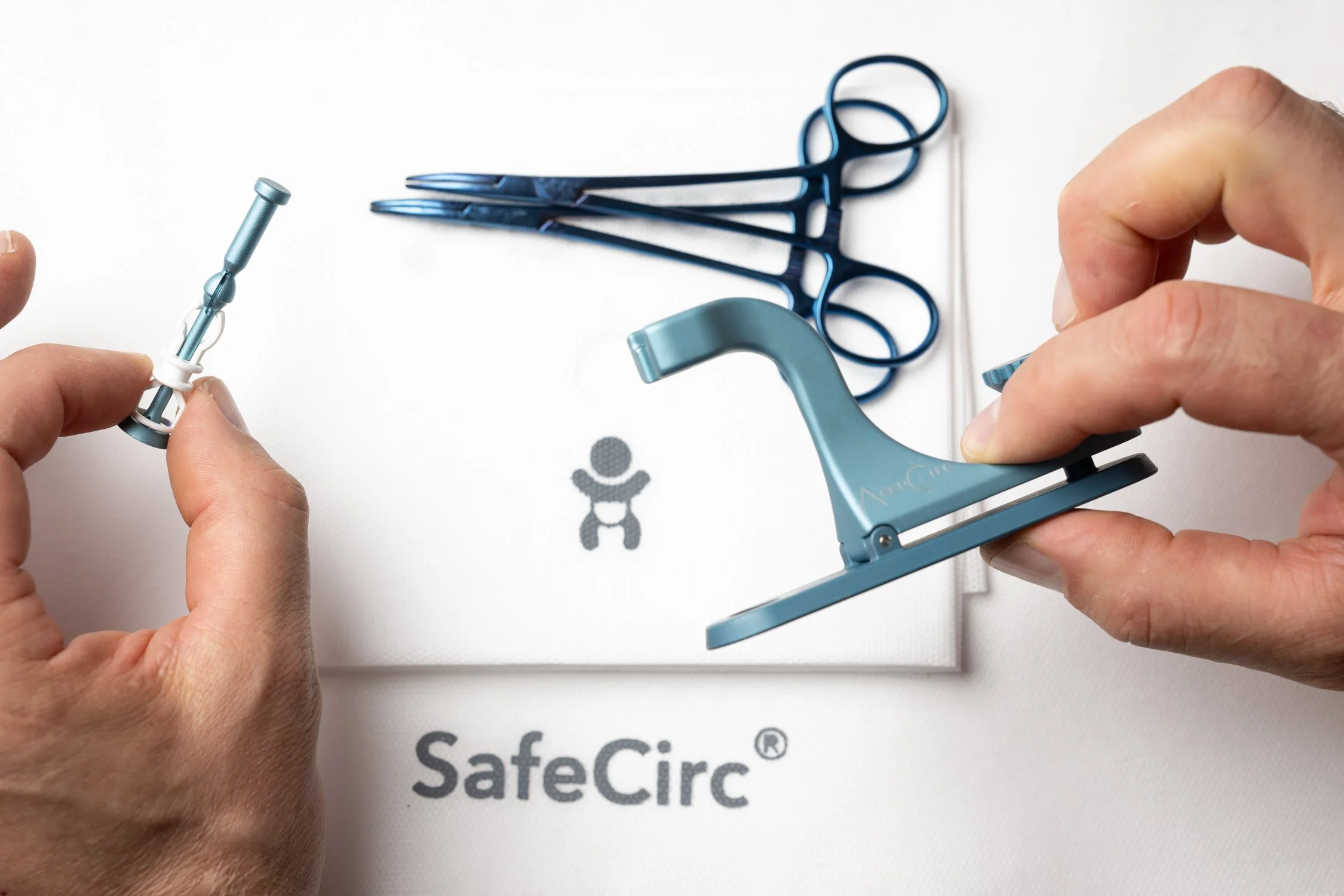
The AccuCirc® device was designed differently from traditional circumcision devices. Its engineering allows the provider to perform the circumcision without needing to make a separate dorsal slit first. This is one of the key innovations that makes AccuCirc® minimally invasive.
The device includes a foreskin holder and a protective shield, allowing the provider to achieve the same result as traditional devices but with fewer incisions and less tissue trauma. The surgical pen marking system provides precision without the need for the extra step.
Why does one less incision make a difference for your baby?
An extra incision means extra trauma to delicate newborn tissue. Each cut:
Increases the risk of bleeding during the procedure
Creates additional discomfort for the baby during healing
Increases the amount of tissue handling during surgery
In the newborn period, babies are already adjusting to life outside the womb. Minimizing unnecessary tissue trauma supports faster, easier healing and reduces discomfort during a sensitive time for both baby and family.
This is why SafeCirc® prioritizes not just the final result, but the gentleness of the procedure itself. Using a device that doesn't require a dorsal slit is one way we reduce unnecessary trauma during circumcision.
SafeCirc®: designed for your baby's comfort
The choice to eliminate the dorsal slit is just one example of how SafeCirc® approaches circumcision differently. We use the AccuCirc® device because it was engineered with both safety and gentleness in mind. No dorsal slit means fewer incisions, less tissue handling, and less trauma during healing.
We also perform circumcisions in the 7-28 day window, which gives your baby time to recover from birth and establish breastfeeding before the procedure. Combined with our 100% follow-up care and zero revision rate across 1,000+ procedures, this comprehensive approach reflects our commitment to optimal outcomes for your baby.
Bottom line
A dorsal slit is an extra incision required by the two most common hospital circumcision devices: the Gomco clamp and Plastibell. The AccuCirc® device was designed to eliminate this step, requiring no dorsal slit while maintaining safety and precision. At SafeCirc®, we choose our tools and techniques specifically to minimize trauma and support your baby's comfort and healing from start to finish.
FAQs
Does a dorsal slit hurt more than the circumcision itself?
The dorsal slit is made with local anesthesia, so your baby shouldn't feel sharp pain, but it's an additional incision. Less tissue trauma during the procedure generally means less discomfort during recovery.
If my baby has already been circumcised with a dorsal slit, does that matter now?
The dorsal slit itself is not a complication when properly performed. What matters now is ensuring proper healing. Your pediatrician can assess your baby's specific situation if you have concerns.
Do all hospitals avoid the dorsal slit?
No. Most hospitals use the Gomco clamp or Plastibell, both of which require a dorsal slit. If avoiding a dorsal slit is important to you, you may want to ask your provider specifically about the device they use and whether it requires this extra incision.
How long is the recovery without a dorsal slit?
Most babies circumcised with AccuCirc® heal completely within 7-10 days. While there are many factors affecting individual healing, using a device that minimizes tissue trauma supports faster, more comfortable recovery overall.

Ready to learn more?
We're here. Schedule a free consultation, book a tour of our Center, or schedule your baby's care today.